
SEO
OpenSEO: A New SEO Platform Built for AI and Flexibility
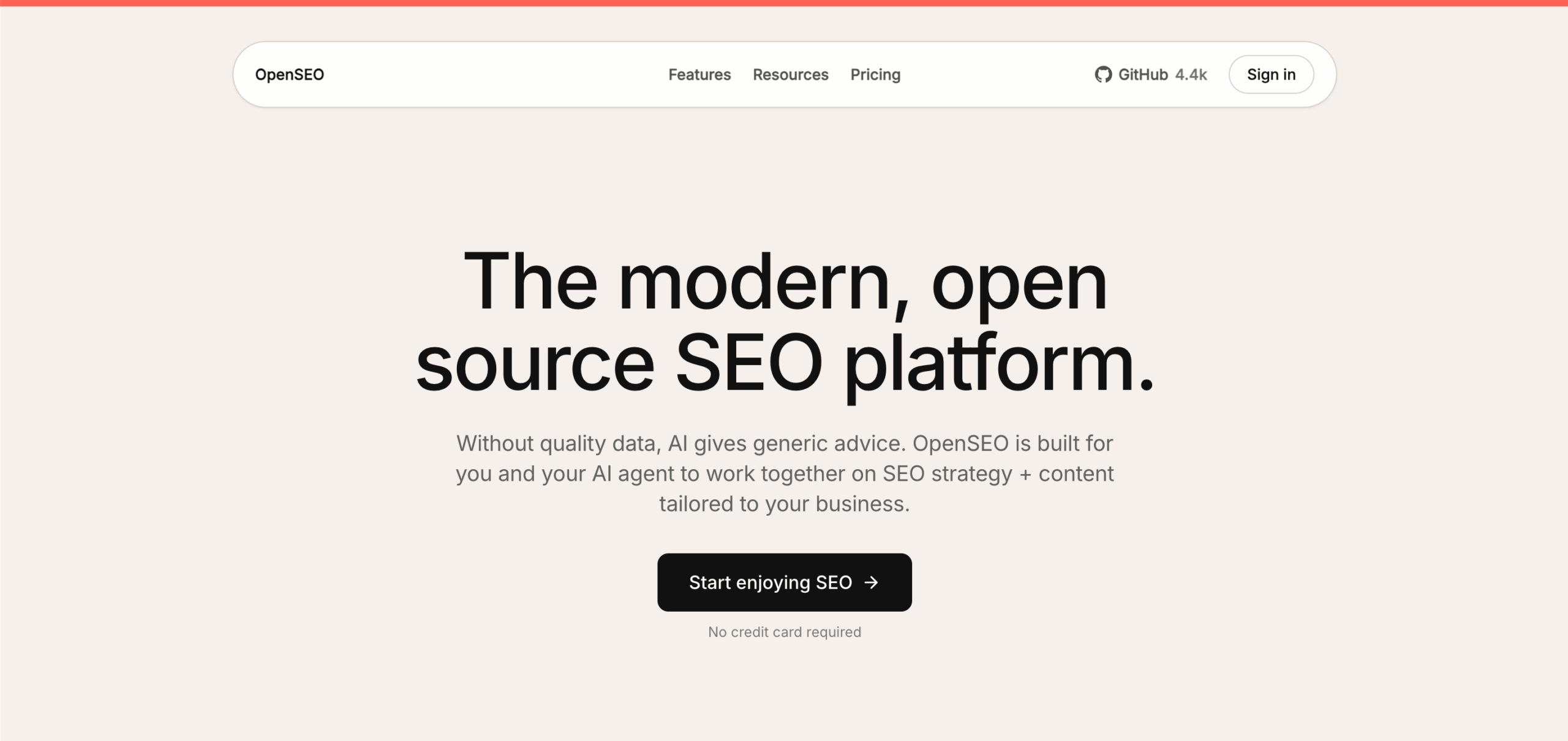
OpenSEO is a newer SEO service that markets itself as “the modern, open source SEO platform.” Its core idea is simple: instead of paying for a large monthly subscription, you can self-host the software for free and connect it to paid SEO data sources such as DataForSEO, while also using it through MCP with AI agents. The product emphasizes keyword research, competitor analysis, backlinks, rank tracking, technical audits, and AI-search visibility, all in one workflow.
What makes OpenSEO interesting is not only the feature list, but the product philosophy. It is designed for users who want control, lower fixed costs, and a tighter connection between SEO work and AI-assisted workflows. For agencies, developers, and technically minded marketers, that combination makes it feel less like a classic SEO suite and more like an extensible system for modern search operations.
How It Compares with Ahrefs
Ahrefs is still one of the strongest reference points in the SEO market. Its pricing page shows plans starting at $29/month for Starter, then $129/month for Lite, $249/month for Standard, $449/month for Advanced, and $1,499/month for Enterprise. Ahrefs also offers a very broad product stack, including Site Explorer, Keywords Explorer, Site Audit, Rank Tracker, Brand Radar, API access, and MCP Server support.
Compared with Ahrefs, OpenSEO is much more open-ended and potentially cheaper if your usage is light or irregular. Ahrefs is a polished, mature platform with huge historical depth, wide feature coverage, and strong infrastructure, while OpenSEO is more attractive if you want self-hosting, open-source control, and an AI-first workflow. In short, Ahrefs is the safer enterprise-grade choice; OpenSEO is the more experimental and developer-friendly option.
How It Compares with Moz
Moz Pro is another established SEO tool, and its entry-level plan is listed at $49/month. Moz has long been known for keyword research, rank tracking, site audits, and its authority metrics, making it a familiar choice for smaller teams and agencies. It is generally easier to approach than some larger SEO suites, especially for users who want a more traditional SEO workflow.
Against Moz, OpenSEO offers a more modern architecture and a more flexible deployment model. Moz is a commercial SaaS product with a conventional subscription structure, while OpenSEO lets you self-host and pay mainly for the data you consume. If you prefer a simpler vendor-managed experience, Moz is easier to adopt; if you want control, customization, and AI-agent integration, OpenSEO is the more forward-looking option.
Other Relevant Alternatives
Semrush is the other major name worth mentioning because it competes directly with Ahrefs in the all-in-one SEO category. While Semrush pricing can vary by toolkit, it remains a premium commercial platform built for teams that want keyword research, content tooling, and broad marketing workflows in one place. It is closer to Ahrefs than to OpenSEO in pricing philosophy and platform maturity.
A few other tools matter depending on the use case. If you want a lightweight, budget-friendly workflow, OpenSEO is interesting because it targets the gap between expensive all-in-one suites and smaller point tools. If you need a well-known SaaS with strong support, documentation, and a long track record, Ahrefs, Moz, and Semrush remain more conservative choices.
Strengths and Limits
OpenSEO’s biggest strengths are its open-source model, self-hosting option, usage-based cost structure, and AI integration through MCP. It also covers the main SEO workflows most teams actually need: research, audits, backlinks, rank tracking, and AI visibility. Public reviews and product listings suggest it is gaining attention as a budget-friendly option for small to mid-sized agencies.
Its main limitation is maturity. Ahrefs and Moz have been around longer, with deeper market trust, broader documentation, and more established commercial support structures. OpenSEO looks promising, but it is still the kind of product that appeals most to users who are comfortable adopting newer tools and tolerating a little roughness in exchange for flexibility.
Which Tool Fits Best
For solo SEOs or small agencies that want predictable software and minimal setup, Moz or Ahrefs are still the easiest recommendations. For larger teams that need a very complete toolkit and proven infrastructure, Ahrefs is the strongest all-around benchmark here. For developers, technically oriented marketers, and AI-heavy workflows, OpenSEO stands out because it combines SEO data, self-hosting, and agent-friendly automation in a way the older tools do not fully match.
If you are writing about the future of SEO tools, OpenSEO is best framed as a challenger rather than a replacement. It does not need to beat Ahrefs or Moz on brand recognition to be relevant; it only needs to offer a better fit for users who value ownership, flexibility, and AI-assisted execution.
Closing Perspective
OpenSEO is notable because it reflects where SEO tooling may be heading: less software lock-in, more workflow automation, and tighter integration with AI systems. Ahrefs and Moz remain strong because they are reliable, polished, and proven at scale. But OpenSEO is worth watching closely, especially for agencies and web professionals who want a more modular and cost-conscious approach to SEO.
Stay in the loop with Entireweb
Get the latest updates delivered straight to your inbox. No spam - unsubscribe anytime.