
SECURITY
Major Internet Disruptions in Q2 2026 Show How Fragile Our Connected World Can Be

We often think of the Internet as something that simply works. Websites load, apps connect, and online services are available whenever we need them. But behind every online experience is a complex network of physical infrastructure, data centers, cables, power systems, and organizations working together.
During the second quarter of 2026, several major events highlighted how easily connectivity can be affected. According to data from Cloudflare Radar, Internet disruptions during the quarter were caused by everything from extreme weather and earthquakes to government actions and technical infrastructure failures.
While the Internet remains remarkably resilient, these events show that even small failures in critical systems can have a large impact on users.
Severe Weather and Power Failures Disrupt Connectivity
One of the most significant Internet disruptions during the quarter occurred in Guam after Super Typhoon Sinlaku passed near the island in April.
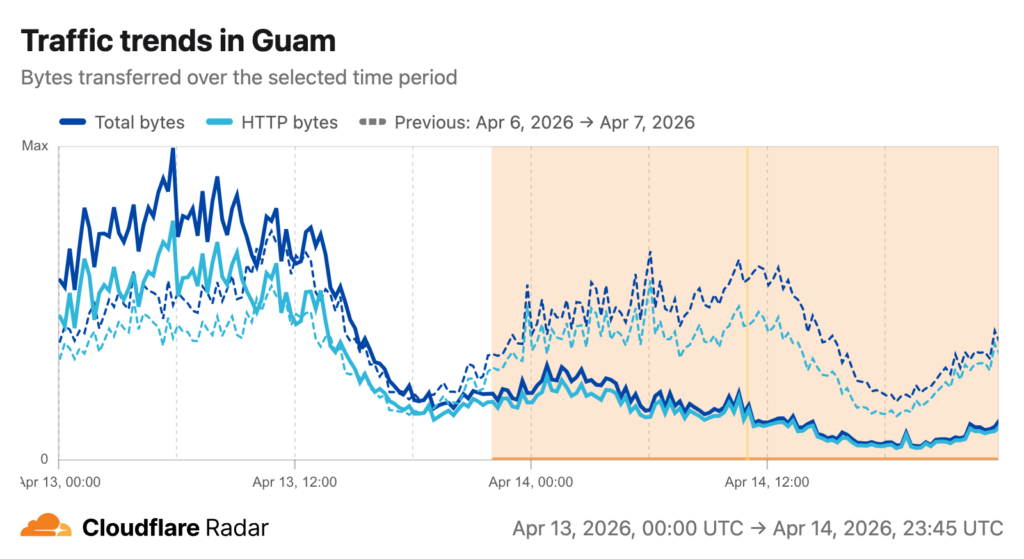
Although Guam avoided a direct hit, strong winds caused widespread power outages and affected essential infrastructure, including water systems. As a result, Internet traffic from the territory dropped by around 80% compared with expected levels.
The incident is a reminder that digital infrastructure still depends heavily on the physical world. When electricity, communication networks, or local infrastructure are damaged, online services can quickly become unavailable.
A similar pattern appeared after major earthquakes struck northern Venezuela in June. Internet traffic dropped sharply as local networks were affected by the disruption caused by the earthquakes.
Later in the quarter, a power outage in Tanzania caused another significant decline in Internet traffic. Although the cause was different, the effect was similar: users experienced difficulties accessing online services and communicating.
Government Decisions Can Quickly Change Internet Access
Not all Internet disruptions are caused by accidents or infrastructure failures. During Q2 2026, several countries experienced government-mandated shutdowns.
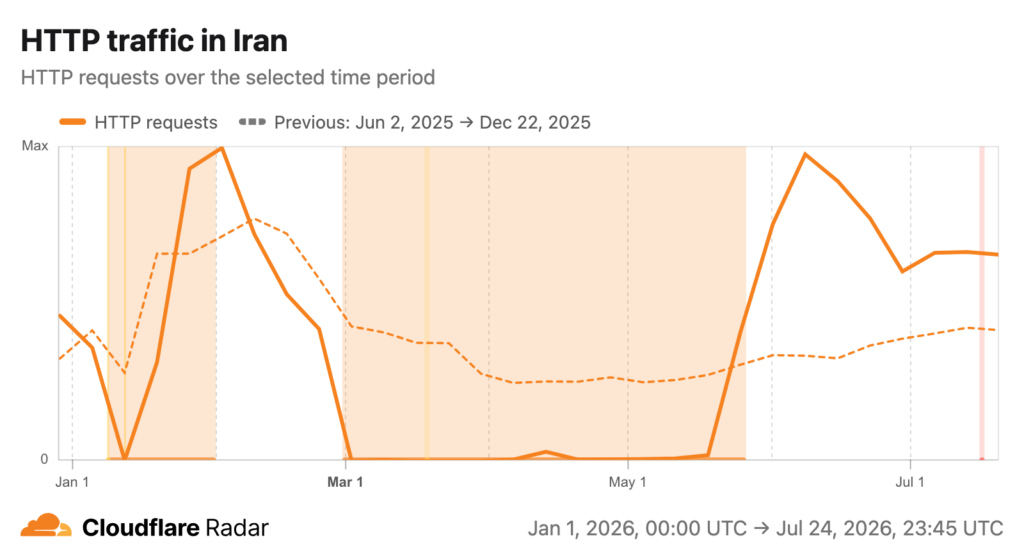
Iran restored Internet access after an 88-day blackout that had almost completely disconnected the country from the global Internet. Traffic gradually returned, but remained below previous levels, showing that restoring connectivity after a major shutdown is not always immediate.
Sudan and Iraq also experienced repeated Internet shutdowns during national examination periods. Authorities temporarily restricted access in an effort to prevent cheating during exams.
These events demonstrate how much influence governments can have over national connectivity. Internet access is not only determined by technology – it can also be affected by political decisions and regulations.
Cloud Infrastructure Can Also Be Vulnerable
Modern websites and applications increasingly rely on large cloud providers. However, even these platforms are not immune to physical damage.
During the quarter, an AWS cloud region in the Middle East experienced reduced availability after infrastructure was damaged during regional conflicts. Although many websites continued operating normally, services hosted in the affected region were impacted.
This highlights an important point for businesses: hosting with a major cloud provider does not automatically guarantee complete availability. Geographic redundancy and backup systems remain important.
Small Technical Problems Can Create Large Outages
Some of the most interesting disruptions during Q2 were caused by highly technical issues rather than physical damage.
In Germany, a DNSSEC key rollover problem affected .de domains. DNSSEC is designed to make the Internet more secure by verifying that domain information has not been modified. However, when incorrect digital signatures were distributed, many systems rejected requests to German websites.
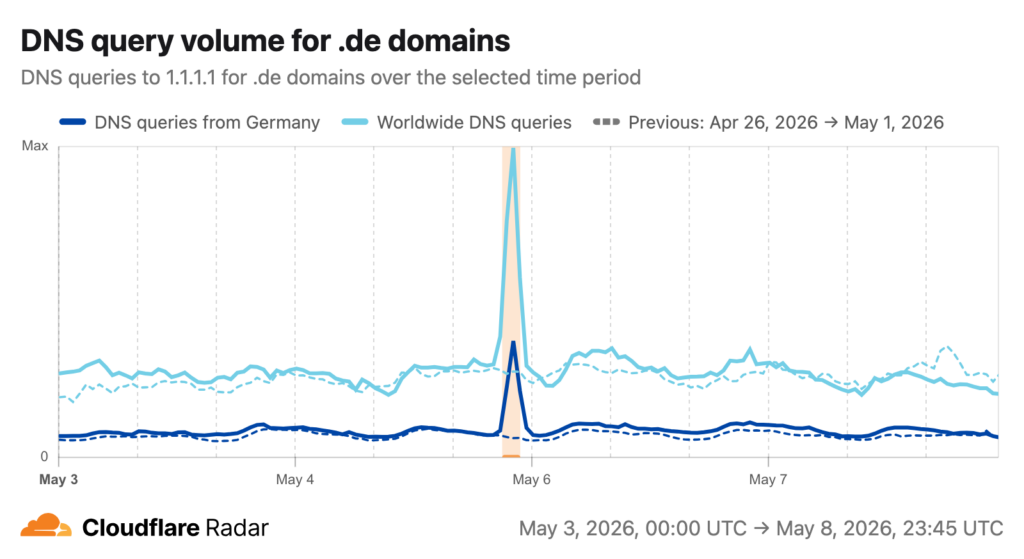
From a user’s perspective, the problem was simple: websites stopped loading.
The incident shows how even routine maintenance in critical Internet systems can have widespread consequences when something goes wrong.
Undersea Cables and Physical Connections Remain Critical
Another disruption affected Saint Lucia in the Caribbean after a fiber cable was damaged.
Many regions rely on a limited number of physical connections to the global Internet, including terrestrial and submarine cables. When one of these connections fails, the impact can be much larger than many users expect.
During the outage, traffic from one of the country’s major providers dropped significantly before recovering after repairs were completed.
The Internet Is Resilient – But Not Invincible
The disruptions observed during the second quarter of 2026 came from very different causes: storms, earthquakes, power failures, government decisions, cloud infrastructure damage, software-related issues, and cable failures.
Together, they reveal an important reality: the Internet is not a single system. It is a collection of interconnected networks and services that depend on thousands of individual components working together.
Most of the time, this complex system works extremely well. But when one critical part fails, millions of users can feel the impact almost instantly.
Understanding these disruptions is important not only for network providers but also for businesses that depend on online availability. Monitoring, redundancy, and preparation remain essential parts of keeping digital services reliable.