
Google AdSense celebrated its 23rd anniversary on June 18th.
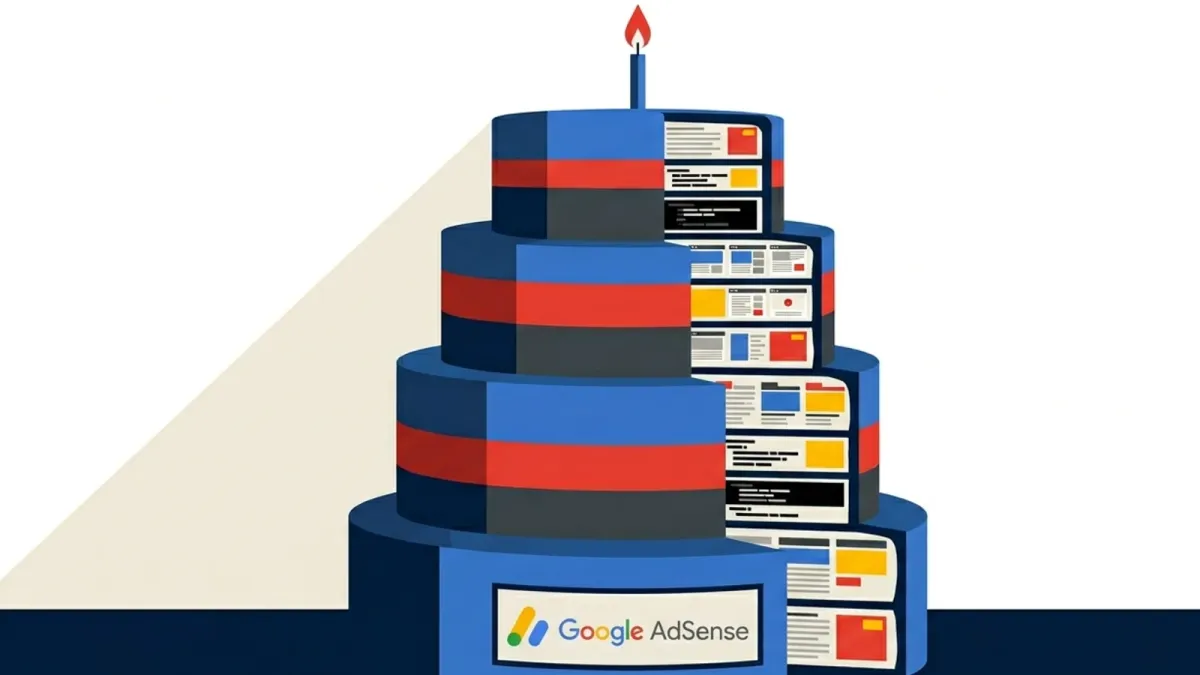
This week, Google celebrated a special milestone – its 23rd birthday for Google AdSense. The program was first announced on June 18, 2003, in Mountain View, California. It changed the way websites of all sizes earned money online, and many of its early design ideas still influence how publishers make money today.
The Beginning of AdSense
In 2003, Google’s AdSense was a new idea. The company described it as a way for website owners to show ads that matched their content. These ads were mainly text links called Google AdWords ads. When visitors clicked on these ads, the publisher earned money. Google aimed for a better web experience by replacing annoying pop-up ads with relevant, text-based ads that didn’t bother users. The main goal was to help website creators earn money and keep creating great content for the web.
How It Worked in 2003
Back then, it was simple. Publishers applied online to join the program. Google checked their websites to see if they followed rules. Once approved, publishers pasted a small piece of code into their web pages. This code showed the ads. Publishers could then track how well their ads worked through online reports. Google’s team kept an eye on the sites to make sure everything stayed fair.
At launch, AdSense gave publishers access to over 100,000 advertisers – from big brands to small local businesses. There was also a special premium program for very large sites (more than 20 million page views a month), which got personal support from Google. Companies like ABC.com, CNET, and About.com were among the first premium partners.
The Promise of Better Web Marketing
Google’s co-founder Sergey Brin explained that AdSense was designed not just to make money but also to make the web a better place. Brin said: “AdSense makes the web better by showing relevant and unobtrusive text ads instead of annoying pop-ups. It helps publishers earn money and keeps the web a great place for users and creators alike.”
Early publishers appreciated this. For example, Erin Martin from Infoplease said their website doubled their advertising income with AdSense. Other publishers liked that the ads were relevant and didn’t disrupt the user experience.
Where AdSense Was in 2003
Initially, AdSense was only for English-language websites. It aimed to serve websites worldwide in English. The network of advertisers was global, and Google had offices in North America, Europe, and Asia. The idea was to connect content creators with advertisers no matter where they were.
How AdSense Has Changed Over 23 Years
Since 2003, AdSense has grown and changed a lot. The simple text ads became display ads, videos, native ads, and many other formats. Automation replaced manual work – publishers no longer pasted code by hand but used automatic tools like Auto Ads launched in 2018.
Google also added new features like Offerwall messages and Ad Intents, which are more like tools for making visitors do something, like watch a rewarded ad or click links in the content. These are different from the original unobtrusive text ads.
The way ads are bought also changed. In 2003, Google worked with a big network of advertisers directly. Now, ads are bought through complex systems involving real-time auctions and programmatic buying with many new players like demand-side platforms and supply-side platforms.
The Shift in Revenue and Challenges
Twenty-three years later, Google’s advertising revenue is still huge but has faced new challenges. The “Google Network” earned $7.4 billion in the second quarter of 2025, but that was a small drop from previous years. AI (artificial intelligence) features now help users find answers without visiting external websites – reducing traffic that publishers used to earn money from. As a result, the share of Google’s ad revenue from its own sites has increased, reaching 90% in 2025.
Problems like technical failures and new privacy regulations have also made things more complicated for publishers. For example, in January 2026, a major technical issue caused a significant drop in publisher income.
Why the Anniversary Matters
Looking back, it’s interesting to see how AdSense’s core idea remains the same – connecting publishers to advertisers through a simple code snippet. Yet, the technology behind it has become very complex, with new rules about privacy and advertising standards.
Despite all the changes, the main promise of AdSense – to support content creation and make the web better – still guides Google today. The challenge now is whether the platform can continue to fulfill that promise in a world of rapid technological and regulatory change.
Summary
Google launched AdSense 23 years ago, hoping to help website owners earn money while improving user experience. It started as a simple, text-based ad system and has grown into a vast, complex advertising ecosystem. Though the goals remain the same, the way AdSense works today is much more advanced, facing new challenges but still shaping how websites and advertising coexist online.